
The Email Sender Identity Crisis: Why Consistency Matters More Than You Think
%201.png)
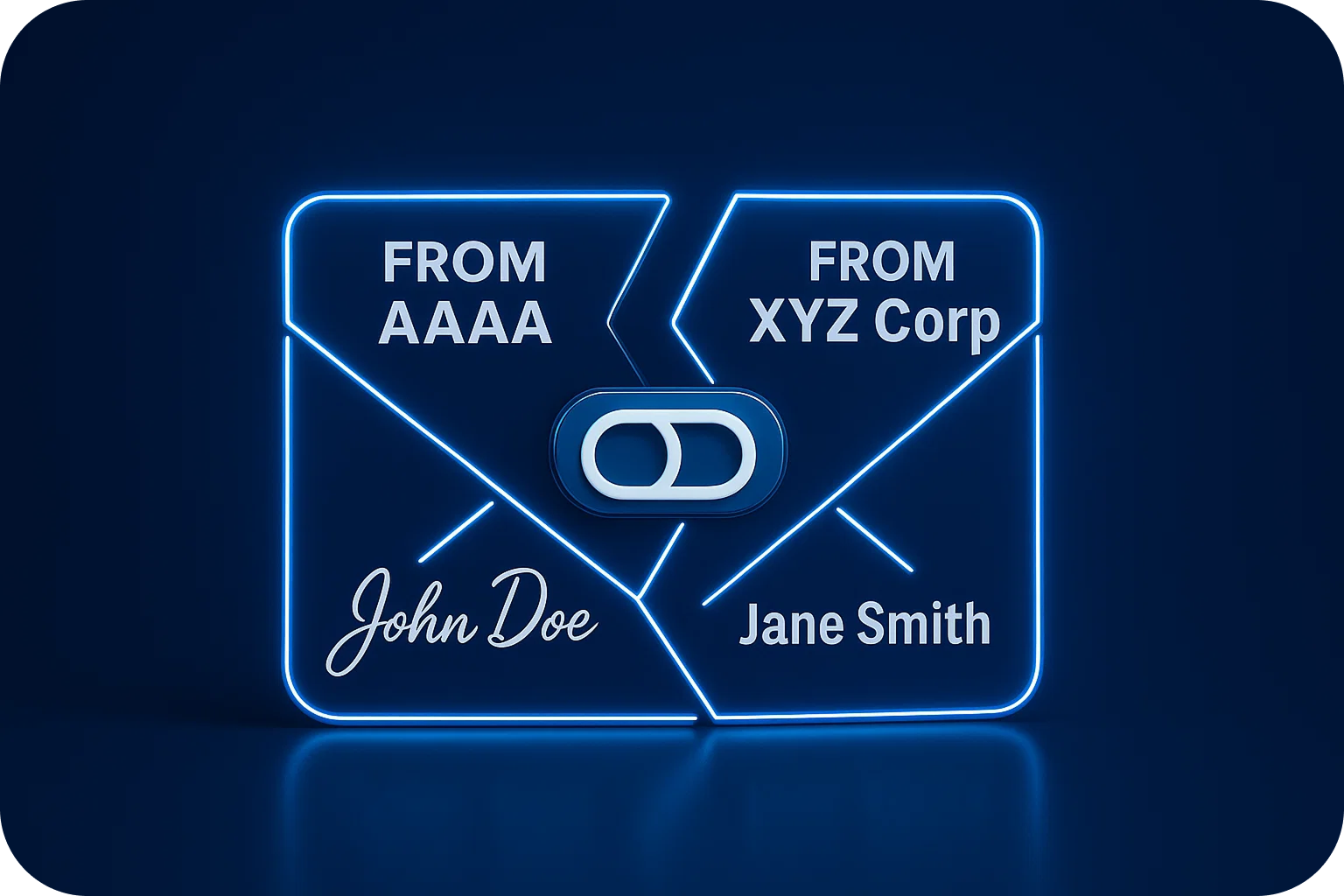
In the world of cold email outreach, your sender identity is your digital fingerprint. Yet many businesses unknowingly sabotage their deliverability by sending mixed signals to inbox providers. The result? Lower open rates, spam folder placements, and damaged sender reputation that takes months to rebuild.
Let's explore why sender identity consistency matters more than most marketers realize and how to maintain a cohesive profile that inbox providers trust.
What Is Sender Identity?
Your sender identity encompasses every signal that tells inbox providers "who you are" as an email sender. This includes:
- From name and email address
- Domain reputation and authentication records (SPF, DKIM, DMARC)
- IP address reputation
- Sending patterns and volume
- Email content and formatting consistency
- Reply-to addresses and contact information
Think of it as your email passport. Just as border agents scrutinize inconsistencies in travel documents, inbox providers analyze every aspect of your sender identity to determine whether you're trustworthy.
The Hidden Cost of Inconsistent Sender Identities
1. Confusing Inbox Providers
Gmail, Outlook, and other inbox providers use machine learning algorithms to evaluate sender behavior. When your sender identity changes frequently—switching between domains, rotating email addresses randomly, or dramatically altering sending volumes—these algorithms flag your emails as potentially suspicious.
Inconsistency creates uncertainty. And when inbox providers are uncertain, they err on the side of caution by filtering emails to spam or promotions folders.
2. Eroding Recipient Trust
Recipients develop recognition patterns. When they see emails from "Sarah at Company" one week and "Sales Team at Company" the next, using different email addresses and domains, trust erodes quickly.
This confusion leads to:
- Lower open rates as recipients don't recognize the sender
- Increased spam complaints from confused or frustrated recipients
- Damaged brand perception and credibility
3. Fragmenting Your Sender Reputation
Email trust signals are built over time through consistent positive interactions. When you constantly change sender identities, you're essentially starting from zero with each new identity.
Instead of building one strong sender reputation, you're creating multiple weak ones. This fragmentation makes it nearly impossible to achieve the 96-98% inbox placement rates that consistent senders enjoy.
Common Sender Identity Mistakes
Rotating Domains Without Strategy
Many cold outreach teams believe that constantly rotating domains protects their primary domain. While domain rotation has its place, doing it without a coherent strategy creates more problems than it solves.
The mistake: Purchasing dozens of random domains and rotating through them weekly without proper warm-up or consistent sending patterns.
The solution: Use a strategic approach with 5-10 properly warmed domains, maintaining consistent sending patterns across each one.
Inconsistent "From" Names
Your "From" name should be recognizable and consistent. Constantly changing between personal names, company names, and generic terms like "Sales Team" confuses both recipients and inbox providers.
The mistake: Monday's email comes from "John Smith," Wednesday's from "Acme Corp," and Friday's from "Business Development Team."
The solution: Choose one format (typically a personal name with company affiliation) and stick with it across campaigns.
Dramatic Volume Fluctuations
Sending 50 emails one day, 5,000 the next, then nothing for a week sends alarm bells ringing for inbox providers.
The mistake: Inconsistent sending schedules that spike and drop without predictable patterns.
The solution: Gradually scale sending volume and maintain consistent daily sending patterns, respecting the recommended maximum of 20 emails per inbox per day.
Mismatched Authentication Records
When your SPF, DKIM, and DMARC records don't align properly with your sending infrastructure, inbox providers see a fragmented identity.
The mistake: Setting up authentication records incorrectly or failing to update them when changing email infrastructure.
The solution: Ensure all authentication records are properly configured and aligned with your actual sending infrastructure.
Building a Consistent Sender Identity: Best Practices
1. Establish Clear Sending Guidelines
Create documentation that outlines:
- Approved sender names and formats
- Domain usage strategy and rotation schedule
- Daily sending volume limits per inbox and domain
- Email template standards and formatting
- Warm-up protocols for new domains and inboxes
2. Implement Proper Email Infrastructure
Use a platform that supports consistent sender identity management. This includes:
- Automated DNS configuration for authentication records
- Systematic domain and inbox warm-up processes
- Volume controls that prevent dramatic fluctuations
- Integration with your outreach tools to maintain consistency
With proper infrastructure, you can scale to 100x your current outreach volume while maintaining the same pricing and deliverability rates.
3. Warm Up Systematically
New domains and email accounts need 3-4 weeks of gradual warm-up before full-scale sending. During this period:
- Start with 5-10 emails per day per inbox
- Gradually increase volume by 10-20% every few days
- Maintain consistent sending patterns
- Monitor deliverability metrics closely
4. Monitor and Maintain Reputation
Regularly check:
- Inbox placement rates across Gmail, Outlook, Yahoo, and other providers
- Spam complaint rates (should stay below 0.1%)
- Bounce rates and email engagement metrics
- Domain and IP reputation scores
Address issues immediately before they compound into larger reputation problems.
5. Segment Strategically
Rather than using completely different sender identities for different campaigns, create logical segments that maintain overall consistency:
- Use subdomain structures that clearly relate to your main domain
- Maintain the same sender name format across segments
- Keep authentication records aligned across all sending domains
The Long-Term Payoff of Consistency
Businesses that maintain consistent sender identities see measurable benefits:
- 96-98% inbox placement rates instead of 60-70%
- Higher open and response rates due to sender recognition
- Faster scaling capabilities without deliverability degradation
- Lower infrastructure costs by maximizing the value of each domain and inbox
- Stronger brand recognition and trust with prospects
Most importantly, consistency compounds over time. Each positive sending interaction builds on the previous one, creating a strong sender reputation that gives you the benefit of the doubt with inbox providers.
Conclusion
Your sender identity isn't just a technical detail, it's the foundation of your email deliverability and the first impression you make on prospects. Inconsistency confuses inbox providers, erodes recipient trust, and fragments your hard-earned sender reputation.
By establishing clear guidelines, implementing proper infrastructure, and maintaining consistent sending patterns, you can build the kind of sender reputation that achieves enterprise-grade deliverability rates.
Remember: in cold email outreach, consistency isn't just a best practice, it's your competitive advantage.
More articles



Get started now


