
Cold Email for Event Promotion: The 60-Day Campaign That Fills Seats
%201.png)
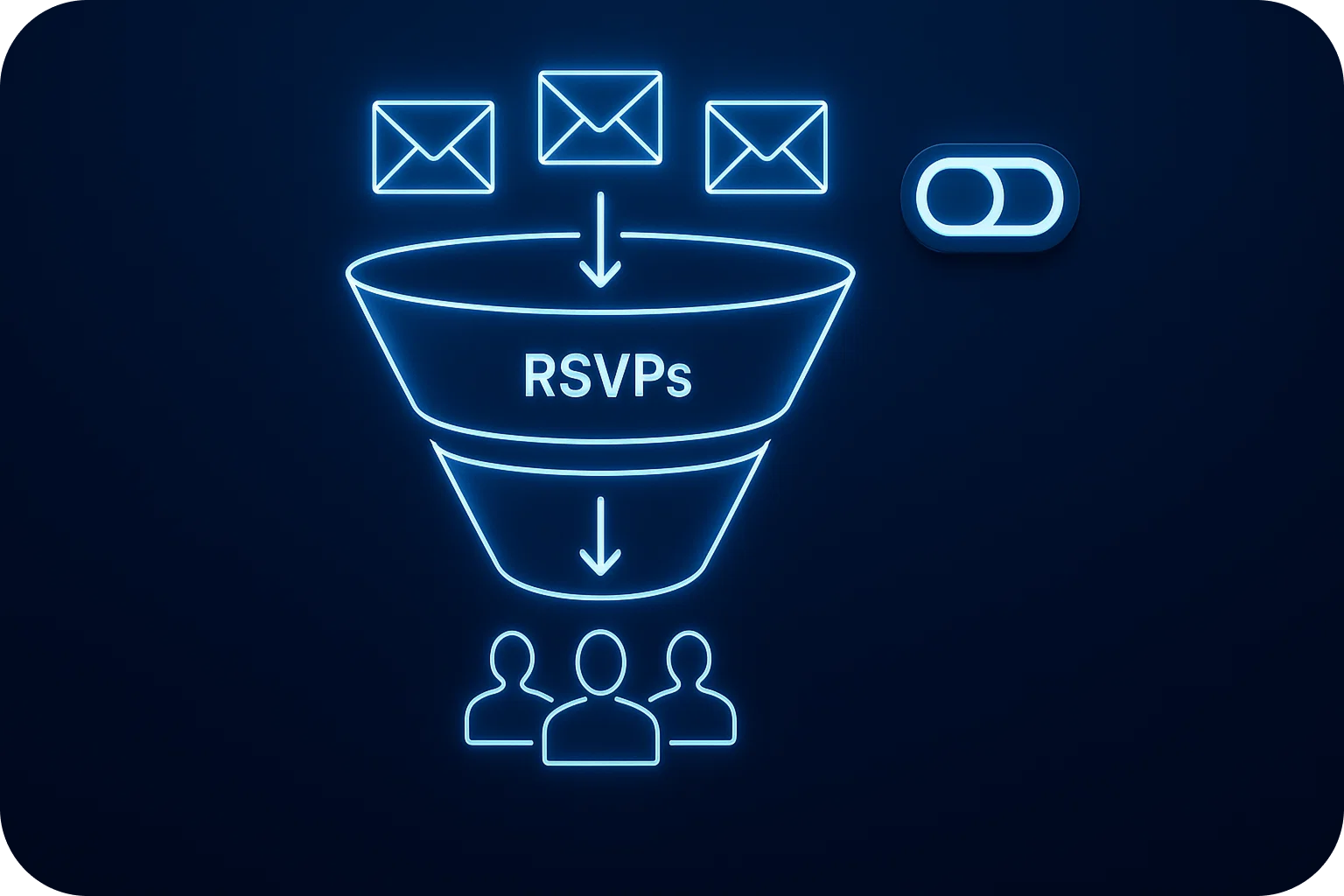
Event seats don't fill themselves. Whether you're promoting a conference, webinar, workshop, or networking event, cold email remains one of the most cost-effective channels for driving registrations when executed with the right timeline and messaging strategy.
The challenge? Most event organizers either start too late or blast generic invitations that get ignored. The solution is a structured 60-day campaign that builds awareness, creates urgency, and converts prospects into registered attendees.
Why Cold Email Works for Event Promotion
Cold email offers unique advantages for event marketing that other channels can't match:
Targeted reach. You control exactly who receives your invitation based on job title, industry, company size, and other relevant criteria.
Scalable personalization. Modern email infrastructure allows you to send thousands of personalized invitations that feel one-to-one.
Measurable results. Track open rates, click-throughs, and registrations to optimize your messaging in real-time.
Cost efficiency. Compared to paid advertising or traditional marketing, cold email delivers exceptional ROI for event promotion.
The key is treating your event promotion like a campaign, not a single blast.
The 60-Day Timeline: When to Send What
Successful event promotion follows a strategic timeline that moves prospects from awareness to registration. Here's the proven framework:
Days 60-45: Awareness Phase
Goal: Introduce the event and establish relevance.
Email 1 (Day 60): The Early Announcement
This initial email should focus on the problem your event solves, not the event itself. Mention the event as a solution, but lead with value.
Subject line example: "Solving [specific challenge] in 2025"
Email 2 (Day 52): The Speaker/Content Teaser
Highlight one compelling speaker or session topic. Create curiosity about what attendees will learn.
Subject line example: "Why [Industry Leader] is speaking about [Topic]"
Days 44-30: Consideration Phase
Goal: Build credibility and address objections.
Email 3 (Day 44): Social Proof
Share testimonials from past events, notable attendees who've registered, or impressive registration numbers.
Subject line example: "Join 500+ [Job Titles] at [Event Name]"
Email 4 (Day 37): The Value Stack
Detail the specific takeaways, networking opportunities, and resources attendees will receive. Make the ROI crystal clear.
Email 5 (Day 30): Early Bird Deadline
Create the first urgency trigger with an early bird discount or bonus expiring soon.
Subject line example: "Last 48 hours: Early bird pricing ends Thursday"
Days 29-14: Decision Phase
Goal: Convert interested prospects into registrations.
Email 6 (Day 29): The Case Study
Share a specific success story from someone who attended your previous event and achieved measurable results.
Email 7 (Day 21): Agenda Deep Dive
Provide the full agenda or a detailed breakdown of the most valuable sessions. Help prospects visualize their day.
Email 8 (Day 14): Two-Week Warning
Remind prospects that the event is approaching and seats are filling up. Introduce scarcity if applicable.
Days 13-1: Final Push Phase
Goal: Capture last-minute registrations.
Email 9 (Day 7): Final Week Announcement
Create urgency with a clear deadline. Mention limited seating if true.
Subject line example: "One week left to register for [Event Name]"
Email 10 (Day 3): Last Chance
Your most direct email. Simple message: register now or miss out.
Email 11 (Day 1): Final Hours
For prospects who've engaged but haven't registered, send a final reminder on the day before or morning of the event (for virtual events).
Email Copywriting Principles for Event Promotion
Beyond timing, your messaging must follow proven cold email writing principles:
Lead with Relevance, Not Features
Bad: "We're hosting a three-day conference with 50 speakers."
Good: "If you're struggling to scale your outbound without sacrificing deliverability, this event is designed specifically for you."
Use Specific, Benefit-Driven Subject Lines
Generic subject lines kill open rates. Be specific about what's in it for them.
Weak: "You're invited to our event"
Strong: "How [Company] scaled to 10K emails/day with 98% deliverability"
Keep It Scannable
Event emails should be easy to skim. Use:
- Short paragraphs (2-3 lines maximum)
- Bullet points for key details
- Bold text for important information
- Clear, prominent CTA buttons
Personalize Beyond First Name
Effective email copywriting for events includes:
- Industry-specific pain points
- Job-title-relevant benefits
- Company-size-appropriate examples
- Geographic considerations (time zones, local relevance)
Create Multiple CTAs
Don't just ask for registration. Offer:
- "View full agenda"
- "See who's attending"
- "Download event brief"
- "Schedule a call to learn more"
These micro-conversions keep prospects engaged even if they're not ready to register immediately.
Segmentation Strategy for Maximum Impact
Not all prospects should receive the same message. Segment your list by:
Engagement level. Send different messages to prospects who've opened multiple emails versus those who haven't engaged.
Job function. Customize messaging based on whether you're targeting executives, practitioners, or managers.
Previous attendance. Past attendees need different messaging than first-time prospects.
Registration status. Stop promoting to people who've already registered (send them preparation content instead).
Technical Setup for Event Email Campaigns
Your messaging strategy means nothing if your emails don't reach the inbox. Ensure you have:
Proper email infrastructure. Use dedicated domains and email accounts for cold outreach. Platforms like Mailpool.ai provide the deliverability infrastructure needed for high-volume event promotion.
Warm-up period. Start warming up your email accounts at least 3-4 weeks before your campaign begins.
Volume limits. Send no more than 50-100 emails per inbox per day to maintain deliverability.
Domain rotation. Use multiple domains (3-5 email accounts per domain) to scale your outreach without triggering spam filters.
Measuring Success: Key Metrics to Track
Monitor these metrics throughout your 60-day campaign:
- Open rate: Aim for 40-60% (indicates subject line effectiveness)
- Click-through rate: Target 8-15% (shows message relevance)
- Registration rate: Industry average is 2-5% from cold email
- Cost per registration: Calculate total campaign cost divided by registrations
- Email-to-show rate: Track how many registrants actually attend
Common Mistakes to Avoid
Starting too late. Sixty days is the minimum. For major conferences, start 90 days out.
Sending identical emails. Every email should have a distinct angle and purpose.
Ignoring deliverability. All the great copywriting in the world won't matter if your emails land in spam.
No follow-up sequence. Most registrations come from emails 4-8, not the first announcement.
Weak calls-to-action. Make registration ridiculously easy with clear, prominent buttons and simple forms.
The Post-Registration Sequence
Your cold email campaign doesn't end at registration. Create a nurture sequence for registered attendees:
- Confirmation email (immediate)
- Calendar invite with pre-event resources (within 24 hours)
- Speaker spotlight or session preview (one week before)
- Final logistics and preparation email (day before)
- Day-of reminder with access links (morning of event)
This sequence reduces no-shows and increases attendee engagement.
Conclusion
Event promotion through cold email isn't about finding the perfect subject line or writing the most clever copy. It's about executing a consistent, strategic campaign that moves prospects through awareness, consideration, and decision phases with the right message at the right time.
The 60-day framework gives you the structure. Your understanding of your audience and their pain points provides the substance. Combined with solid email infrastructure and deliverability practices, you have everything needed to fill seats and create successful events.
Start planning your next event campaign today. Map out your 60-day timeline, craft your core messages for each phase, and set up the technical infrastructure to ensure your emails reach the inbox. Your future attendees are waiting for an invitation they can't refuse.
More articles


Get started now


