
A/B Testing Your Cold Emails: What to Test and Why
%201.png)
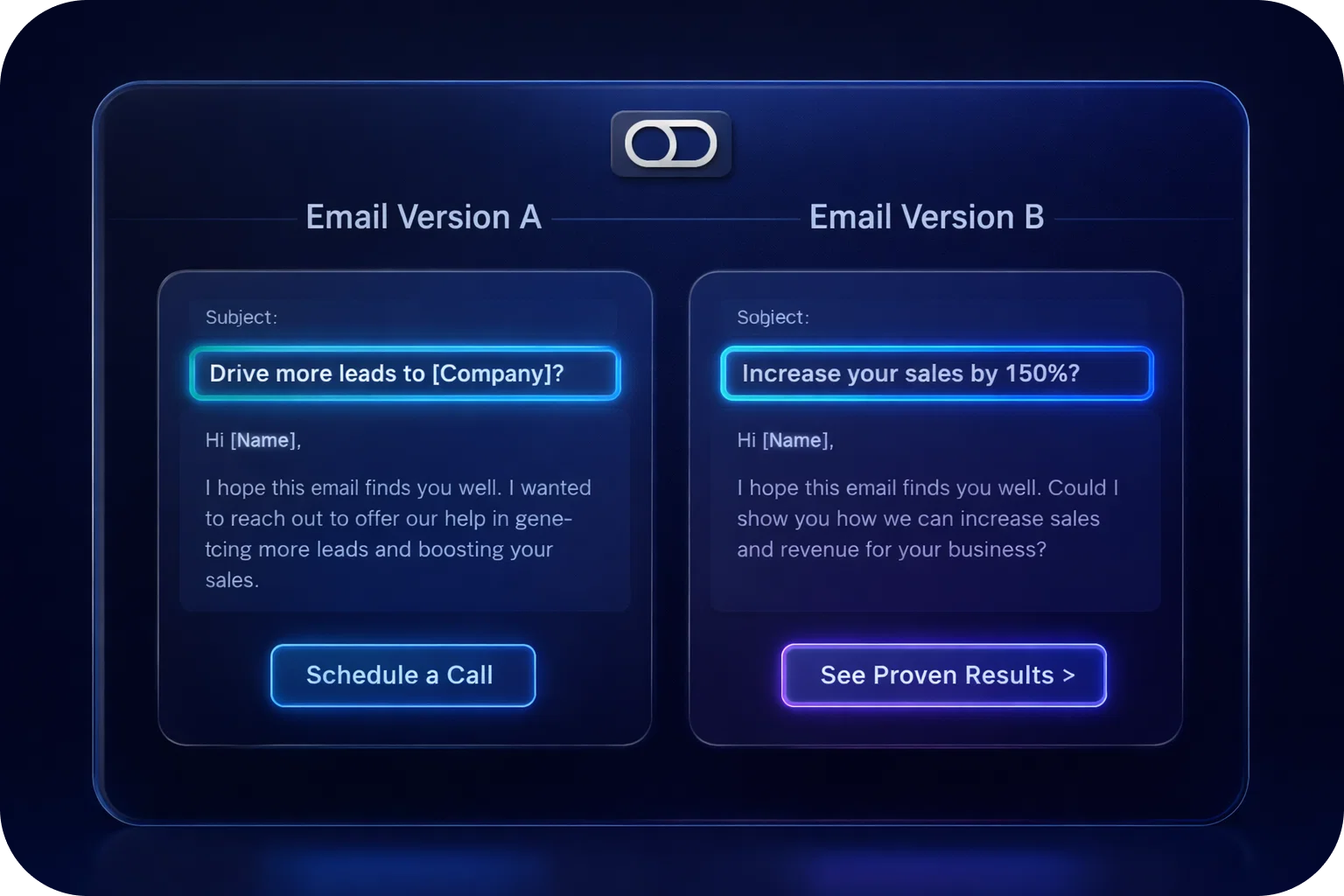
Cold email outreach remains one of the most effective tactics for startups and sales teams looking to build new relationships, generate leads, and drive revenue. But as inboxes become more crowded and recipients more discerning, simply sending more emails isn’t enough. To truly optimize your campaigns, you need to embrace A/B testing, systematically experimenting with different elements of your cold emails to discover what works best.
In this guide, we’ll break down the essentials of A/B testing for cold emails: what to test, why it matters, and how to use your findings to boost response rates, refine your messaging, and improve deliverability.
What Is A/B Testing in Cold Email Outreach?
A/B testing (also known as split testing) is the process of sending two or more versions of an email to similar audience segments, measuring which version performs better, and using those insights to improve future campaigns. In cold email outreach, this means experimenting with variables like subject lines, body copy, calls-to-action (CTAs), send times, and more.
Why A/B Test?
- Data-driven decisions: Remove guesswork from your outreach.
- Higher response rates: Uncover what resonates with your audience.
- Better deliverability: Identify practices that keep you out of spam folders.
- Continuous improvement: Stay ahead of changing trends and recipient preferences.
What Elements Should You A/B Test in Cold Emails?
1. Subject Lines
The subject line is your first (and sometimes only) chance to grab attention. Test for:
- Length: Short vs. long subject lines.
- Personalization: Using the recipient’s name or company vs. generic.
- Tone: Formal vs. casual.
- Curiosity/urgency: Posing a question vs. stating a fact.
Example Test:
A: “Quick question, [First Name]”
B: “Scaling your sales team at [Company]?”
2. Email Opening
The opening line sets the tone and determines whether the recipient keeps reading. Test:
- Directness: Getting straight to the point vs. a soft introduction.
- Personalization: Referencing a recent event or mutual connection.
- Value proposition: Leading with the main benefit vs. a question.
3. Body Copy & Messaging
Your email’s body is where you build trust and communicate value. Experiment with:
- Length: Concise vs. detailed explanations.
- Formatting: Bullet points vs. paragraphs.
- Social proof: Including testimonials or logos vs. none.
- Pain points addressed: Tailoring the message to specific challenges.
4. Call to Action (CTA)
The CTA guides the recipient’s next step. Test:
- Type: Asking for a call vs. feedback vs. a reply.
- Clarity: Explicit (“Book a 15-min call”) vs. open-ended (“What do you think?”).
- Placement: Early in the email vs. at the end.
5. Send Time & Day
Timing can have a major impact on open and reply rates. Test:
- Days of the week: Tuesday vs. Thursday.
- Times of day: Early morning vs. late afternoon.
- Time zones: Localizing send times for global prospects.
6. Signature & Sender Details
Trust is crucial in cold outreach. Test:
- Sender name: Individual vs. team.
- Signature format: Full contact info vs. minimal.
- Job title: Highlighting expertise or keeping it generic.
7. Follow-Up Sequences
Persistence often pays off. Test:
- Number of follow-ups: 1 vs. 3+.
- Timing between follow-ups: 2 days vs. 5 days.
- Follow-up messaging: New value proposition vs. reminder.
How to Run Effective Cold Email A/B Tests
1. Define Your Goal
What are you optimizing for? Opens, replies, meetings booked, or positive sentiment? Choose one primary metric per test.
2. Change One Variable at a Time
To get clear results, only change one element between versions. If you test subject lines, keep the body and CTA identical.
3. Use Sufficient Sample Sizes
Send each variant to enough recipients to get statistically meaningful results. For startups, this might mean running tests over several campaigns.
4. Track and Analyze Results
Measure open rates, reply rates, and conversions. Use your cold email platform’s analytics or integrate with tools like Mailpool.ai for deeper insights.
5. Iterate and Scale
Apply what you learn from each test to future campaigns. Over time, you’ll develop messaging that consistently outperforms the competition.
Why A/B Testing Matters for Deliverability
Deliverability, the ability of your emails to land in the inbox rather than spam, is the foundation of successful outreach. A/B testing helps you:
- Identify subject lines and formats that avoid spam triggers.
- Test different sending patterns to find the optimal cadence.
- Monitor engagement signals (opens, replies) that boost sender reputation.
Pro Tip:
Always warm up new inboxes before large-scale testing, and avoid sending too many emails at once to protect your domain reputation.
Common Pitfalls to Avoid
- Testing too many variables at once: Makes it hard to pinpoint what caused the change.
- Small sample sizes: Leads to unreliable conclusions.
- Ignoring negative results: Learn from what doesn’t work, too.
- Neglecting deliverability: High open rates are useless if your emails land in spam.
Conclusion
A/B testing is essential for any startup or sales team serious about scaling cold email outreach. By systematically testing subject lines, body copy, CTAs, timing, and more, you’ll uncover the tactics that drive the best results for your audience. The result? Higher reply rates, better messaging, and a stronger sender reputation.
Ready to take your cold email campaigns to the next level? Start A/B testing today and turn every outreach into a learning opportunity.
More articles



Get started now


